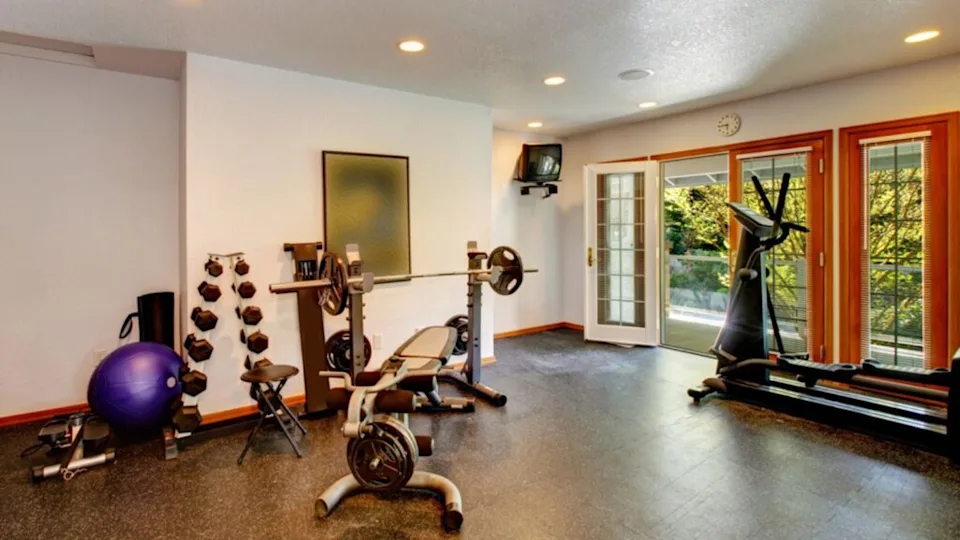
Why Home Gyms Are Booming Right Now
Home gyms have shifted from a niche setup to a mainstream solution for anyone serious about training. The appeal of home gyms comes down to control, convenience, and long-term cost efficiency. Instead of structuring your routine around crowded commercial spaces, home gyms let you train exactly how and when you want. Home gyms remove friction. No commute, no waiting for equipment, and no compromise on your program. That alone dramatically increases consistency, which is the real driver of results. Home gyms also give you ownership of your environment. You control the equipment, layout, and progression. Over time, this creates a system that compounds results rather than resets them every session like in a public gym.
What Are Home Gyms?
Home gyms are strength and fitness setups designed for personal use within a residential space. Home gyms can range from a single multi-station home gym to a fully equipped training room with racks, cables, cardio, and accessories. Most home gyms fall into these categories:
- Multi-station home gyms
- Functional trainers and cable systems
- Smith machines and power racks
- Free weight setups with barbells and dumbbells
- Hybrid home gyms combining multiple systems
The key difference between home gyms and commercial setups is efficiency. Home gyms are designed to maximise output within limited space.
Types Of Home Gyms
Multi-Station Home Gyms
Multi-station home gyms are the most popular all-in-one solution. These machines combine multiple exercises into a single footprint, allowing full-body training without needing multiple pieces of equipment. Typical exercises include:
- Chest press
- Lat pulldown
- Seated row
- Leg extension and curl
- Cable movements
Multi-station home gyms are ideal for beginners and intermediate users who want structure and simplicity.
Functional Trainer Home Gyms
Functional trainers are cable-based home gyms with adjustable arms that allow a wide range of motion. These are more versatile than fixed machines and allow for dynamic, sport-specific movements. Functional trainer home gyms are best for:
- Athletic training
- Core work
- Isolation exercises
- Movement-based training
Smith Machine Home Gyms
Smith machine home gyms use a guided barbell system for safe heavy lifting. These are ideal for solo training where safety is a priority. Smith machine home gyms allow:
- Squats
- Bench press
- Shoulder press
- Controlled heavy lifting
Many modern home gyms combine smith machines with cable systems for maximum versatility.
Free Weight Home Gyms
Free weight home gyms use barbells, dumbbells, and racks instead of machines. These setups offer the most natural movement patterns and unlimited progression. Free weight home gyms are best for:
- Strength training
- Muscle building
- Progressive overload
Hybrid Home Gyms
Hybrid home gyms combine machines and free weights. This is the most complete setup and closest to a commercial gym experience.
Key Benefits Of Home Gyms
1. Time Efficiency
Home gyms eliminate travel time completely. Training becomes frictionless, which increases frequency and consistency.
2. Cost Savings
Home gyms typically pay for themselves within 12 to 24 months compared to ongoing memberships.
3. Training Consistency
Using the same equipment every session allows for accurate tracking and progression.
4. Privacy and Focus
Home gyms remove distractions, making sessions more efficient and focused.
5. Scalability
Home gyms can be built in stages. You can start small and expand as needed.
How To Choose The Right Home Gyms Setup
Choosing the right home gyms setup depends on three core factors:
1. Space
Most home gyms require between 1.5m x 2m and 3m x 3m. Ceiling height should ideally be at least 2.4m. Smaller spaces suit:
- Compact cable machines
- Adjustable dumbbells
- Foldable racks
Larger spaces allow:
- Multi-station home gyms
- Smith machines
- Full hybrid setups
2. Training Goals
Your goal determines your setup:
- Strength should be power rack or Smith machine
- General fitness should be ulti-station home gyms
- Athletic performance shoudlbe functional trainer
- Body recomposition should be hybrid home gyms
3. Budget
Home gyms typically fall into these ranges:
- Entry: $500–$1,500
- Mid-range: $1,500–$4,000
- Premium: $4,000+
Higher budgets provide better build quality, smoother movement, and higher weight capacity.
Essential Equipment For Home Gyms
Even the best home gyms benefit from supporting equipment. Here is how to think about it:
Core Equipment
- Primary machine (multi-gym, rack, or trainer)
- Adjustable bench
- Dumbbells or a barbell
Accessories
- Resistance bands
- Kettlebells
- Cable attachments
- Flooring
Cardio Additions
- Treadmill
- Rowing machine
- Exercise bike
Beginner Setup
- Multi-station home gym
- Adjustable dumbbells
- Bench
Strength Setup
- Power rack or Smith machine
- Barbell and plates
- Bench
Performance Setup
- Functional trainer
- Free weights
- Conditioning equipment
Full Setup
- Functional trainer
- Smith machine
- Leg press
- Cardio machine
Where To Buy Home Gyms
When sourcing equipment, quality and range matter. A good starting point is browsing a dedicated collection of home gyms to compare setups, pricing, and configurations in one place. Choosing from a curated range helps avoid mismatched equipment and ensures compatibility across your setup. Home gyms are no longer a luxury. They are a practical, scalable solution for consistent training. The best home gyms are not the most expensive ones. They are the ones you actually use. Start with a clear goal, match it to your space, and build progressively. That approach ensures your home gym setup evolves with you rather than becoming wasted space.
Consistency beats complexity every time.
FAQ
What are home gyms and how do they work? Home gyms are personal fitness setups that combine machines or weights to allow full-body training at home without needing a commercial gym.
How much space do home gyms need? Most home gyms require between 1.5m x 2m and 3m x 3m, depending on the equipment type.
Are home gyms worth the investment? Home gyms typically pay for themselves within 1–2 years compared to gym memberships.
What is the best type of home gyms setup for beginners? Multi-station home gyms are best for beginners due to guided movements and simplicity.
Can home gyms build muscle effectively? Home gyms can build muscle effectively when progressive overload and proper programming are applied.
What equipment is essential for home gyms? A primary machine, dumbbells or barbells, and a bench are essential for most home gyms.
Do home gyms require maintenance? Home gyms require basic maintenance such as cleaning, cable inspection, and tightening bolts.
Can multiple people use home gyms? Most home gyms are adjustable and suitable for multiple users in a household.
What is the difference between cable and free weight home gyms? Cable home gyms provide guided resistance while free weight setups allow natural movement and unlimited progression.
Can I build home gyms gradually? Home gyms can be built in stages, starting with a single machine and expanding over time.